


Groupleader: Jirka Peschek

Jirka Peschek
RNA Processing and Repair
select submenu:

Research

The cellular pool of ribonucleic acids (RNAs) is immensely diverse and complex. During their biosynthesis, RNA molecules undergo a vast number of co- and posttranscriptional processing and modification steps, which require dedicated enzyme machinery.
tRNA Splicing
One unique example of RNA processing is non-conventional splicing of RNAs, which is an essential step during transfer RNA (tRNA) maturation. tRNAs are transcribed as precursor transcripts (pre-tRNA) and are subjected to multiple posttranscriptional processing events before they can fulfil their function. Intron-containing pre-tRNAs undergo non-conventional splicing—a cytosolic, enzyme-catalysed processing reaction. The splicing of pre-tRNAs occurs in two steps: The intron is first excised by a splicing endonuclease and the resulting tRNA exon halves are ligated by tRNA ligase to form a fully matured functional tRNA. Because eukaryotic tRNA introns disrupt the anticodon stem-loop structure, the removal of these introns is an essential process.

In our lab, we aim to comprehend the structure and function of the eukaryotic tRNA splicing machinery. The mechanistic and structural insights will provide a comprehensive picture of how tRNA splicing enzymes function in the cell.
RNA Repair
While there is a substantial understanding for the various RNA maturation and degradation pathways, much less attention has been given to RNA repair and quality control. RNA can be subjected to damage through non-enzymatic hydrolysis or the action of endonucleases. These RNA cleavage events can be “sealed” by RNA ligases, which catalyse the ligation via phosphodiester bonds. We aim to uncover new RNA repair and quality control pathways based on these enzymes.
Our Approach
Using an interdisciplinary approach from protein and RNA biochemistry to structural biology and yeast genetics, we analyse the machinery and mechanisms that maintain RNA integrity. We often start by in vitro reconstitution of enzyme complexes, to determine their structure-function relationships. Once we purified protein, we study it using x-ray crystallography, cryo-electron microscopy (cryo-EM) as well as biophysical and biochemical methods. We explore the cellular role of RNA processing enzymes in the yeast Saccharomyces cerevisiae and mammalian cells.

The lab in July 2024
CV
Academic Training and Positions
| Since 2020 | Emmy Noether Group Leader, Biochemistry Center, Heidelberg University |
| 2013-2020 | Postdoc with Peter Walter, UCSF, San Francisco, USA |
| 2012 | PhD (Biochemistry), Technical University of Munich |
| 2008-2012 | PhD student with Johannes Buchner, Technical University of Munich |
Awards and Honours
| 2020 | Emmy Noether Fellowship |
| 2014-2017 | Human Frontier Science Program Fellow |
| 2017 | The Protein Society, Hans Neurath Outstanding Promise Travel Award |
| 2009-2011 | Studienstiftung des deutschen Volkes, Doctoral Scholarship |
Current Lab Members
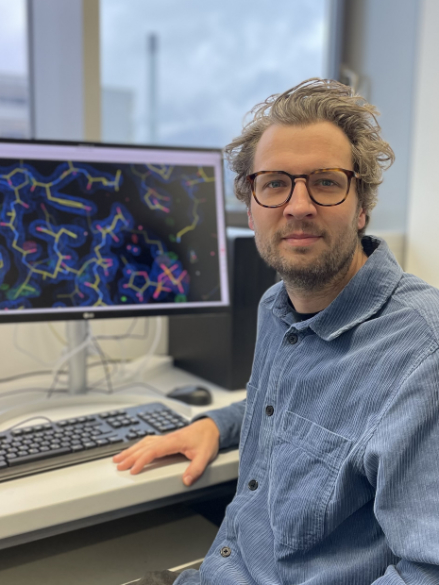 |
Jirka Peschek Group Leader jirka.peschek@bzh.uni-heidelberg.de +49-(0)6221-54-4151 |
|
|
After completing his postdoc in Peter Walter's lab at UCSF, Jirka decided that it is time to start his own group. He assembled a group of young scientists around him to dig deep into the world of RNA processing, especially tRNA splicing. Besides that, he has an ever-growing music collection and enjoys playing tennis.
|
||
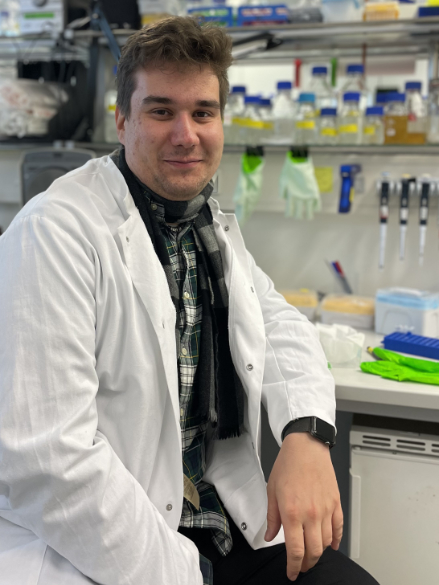 |
Alexander Wirth PhD student alexander.wirth@bzh.uni-heidelberg.de +49-(0)6221-54-4235 |
|
|
Alex joined the lab as a PhD student in June 2023. He tackles the challenge of dissecting eukaryotic RNA repair systems and explores the realms of cell biology for us. Outside the lab, Alex enjoys cooking and exploring indie music.
|
||
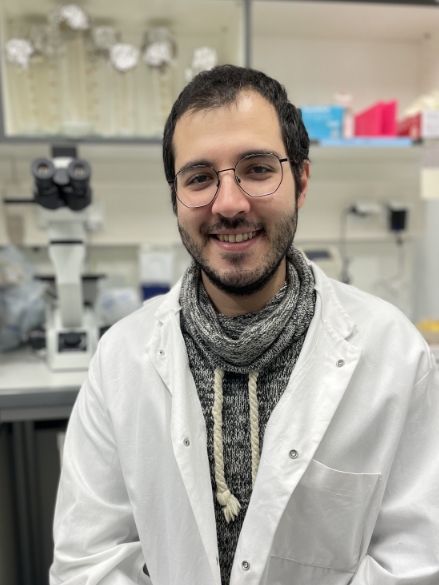 |
Ege Cigirgan PhD student ege.cigirgan@bzh.uni-heidelberg.de +49-(0)6221-54-4235 |
|
|
After studying Molecular Biology and Genetics in Ankara (Turkey), Ege started his PhD study in the Peschek Lab to investigate the molecular interplay between tRNA modification and splicing. To this end, he is using biochemistry and cell biology. While waiting for his cells to divide, he enjoys having a coffee (or two) in the kitchen.
|
||
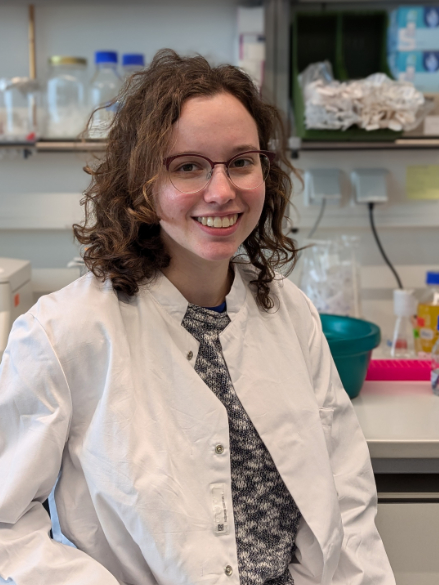 |
Anna Righetti PhD student anna.righetti@bzh.uni-heidelberg.de +49-(0)6221-54-4235 |
|
|
Anna arrived from Milan (Italy) to start her PhD in the Peschek Lab in February 2023. Through her project, she aims to investigate the interaction between enzymes and RNA substrates during non-conventional splicing. When Anna is not in the lab, she likes hiking in nature.
|
||
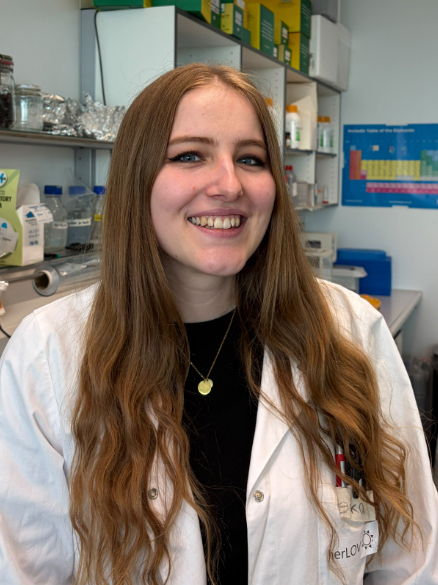 |
Rebekka Arnold PhD student rebekka.arnold@bzh.uni-heidelberg.de +49-(0)6221-54-4235 |
|
|
Bekka joined the Peschek Lab as a PhD student in March 2026, where she dedicates her curiosity and enthusiasm towards dissecting and modulating ATP-dependent RNA ligases.
|
||
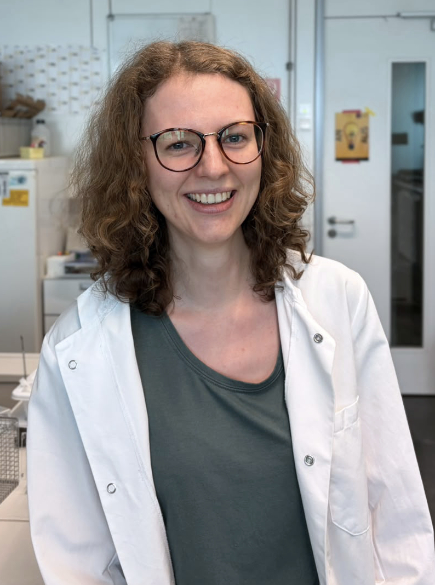 |
Anne Pinnen Master student |
|
|
Anne has joined our RNA repair team for her Master's thesis.
|
||
Former Lab Members
PhD students and postdocs
Janina Lara Gerber (2021-2026, current: patent attorney trainee at Meissner Bolte)
Sandra Köhler (2021-2026, current: postdoc at Beli Lab, IMB/Gutenberg University Mainz)
Laboratory Technician
Petra Hubbe (2021-2022, current: Schuck Lab, BZH)
Master Students
Suria Itzel Morales Guzmán (2022, current: PhD student at Voigt Lab, Uni Zurich)
Carolin Casser (2023)
Bengi Civitoglu (2024/2025, current: PhD student at Ignatova Lab, Uni Hamburg)
Bachelor Students
Lorenz Worf
Paulina Hegyiova
Dominik Kus
Shikana Browne
Rotation Students, Assistants & Interns
Leona Brandl
Pascal Lafrenz
Shudi Zhang
Liana (Kalliopi-Anna) Penteskoufi
Nora Rier
Lea Börner
Svea Wupper
Rafael Salazar
Carolin Hess
Dorothee Mersch
Rainer Kuhn
Lisa Maag
Sabrina Simmet
Bianca Kaifer
Bálint Bozóki
Artem Stetoi
Anne Pinnen
Juliane Groß
Ricardo Perez Velasco
Publications
Complete List of Publications
 https://orcid.org/0000-0001-8158-9301
Selected Publications
Wirth AN, Naarmann-de Vries IS, Pinnen AM, Gopal A, Righetti A, Leppek K, Dieterich C, Peschek J (2026) Eukaryotic tRNA ligases mediate RNA break repair. bioRxiv 2026.05.26.727988.
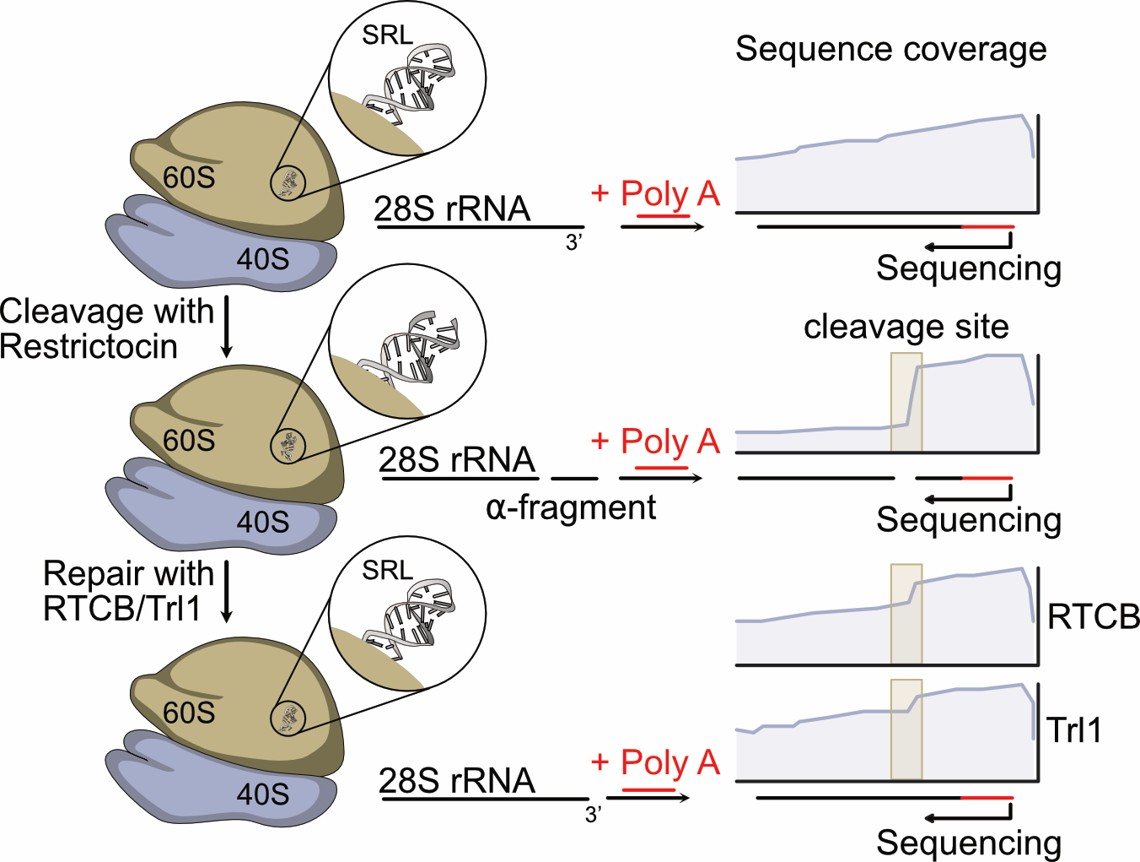
Köhler S, Peschek J (2025) Interdomain assembly between the fungal tRNA ligase adenylyltransferase and kinase domain. RNA. 31(12):1800-1811.

Guo W, Kaczmarczyk I, Kopietz K, Flegler F, Russo S, Cigirgan E, Chramiec-Głąbik A, Koziej Ł, Cirzi C, Peschek J, Reuter K, Helm M, Glatt S, Tuorto F (2025) Queuosine is incorporated into precursor tRNA before splicing. Nat Commun. 16:7044.
Köhler S, Kopp J, Maiti S, Bujnicki JM, Peschek J (2025) Structure of fungal tRNA ligase Trl1 with RNA reveals conserved substrate-binding principles. Nat Struct Mol Biol.

Gerber JL, Morales Guzmán SI, Worf L, Hubbe P, Kopp J, Peschek J (2024) Structural and mechanistic insights into activation of the human RNA ligase RTCB by Archease. Nat Commun. 15:2378

Li W*, Crotty K*, Garrido Ruiz D, Voorhies M, Rivera C, Sil A, Mullins RD, Jacobson MP, Peschek J§, Walter P§ (2021) Protomer alignment modulates specificity of RNA substrate recognition by Ire1. eLife 10:e67425
Peschek J§ & Walter P§ (2019) tRNA ligase structure reveals kinetic competition between non-conventional mRNA splicing and mRNA decay. eLife 8:e44199.

Li W, Okreglak V, Peschek J, Kimmig P, Zubradt M, Weissman JS, Walter P (2018) Engineering ER-stress dependent non-conventional mRNA splicing. eLife 7: e35388.
Peschek J*, Acosta-Alvear D*, Mendez AS, Walter P (2015) A conformational RNA zipper promotes intron ejection during non-conventional XBP1 mRNA splicing. EMBO Rep. 16(12):1688-98.

Mainz A, Peschek J, Stavropoulou M, Back KC, Bardiaux B, Asami S, Prade E, Peters C, Weinkauf S, Buchner J, Reif B (2015) The chaperone αB-crystallin uses different interfaces to capture an amorphous and an amyloid client. Nat Struct Mol Biol. 22(11):898-905.
Feige MJ, Gräwert MA, Marcinowski M, Hennig J, Behnke J, Ausländer D, Herold EM, Peschek J, Castro CD, Flajnik M, Hendershot LM, Sattler M, Groll M, Buchner J (2014) The structural analysis of shark IgNAR antibodies reveals evolutionary principles of immunoglobulins. PNAS 111(22):8155-60.
Peschek J, Braun N, Rohrberg J, Back KC, Kriehuber T, Kastenmüller A, Weinkauf S, Buchner J (2013) Regulated structural transitions unleash the chaperone activity of αB-crystallin. PNAS 110(40):E3780-9.
Müller R, Gräwert MA, Kern T, Madl T, Peschek J, Sattler M, Groll M, Buchner J (2013) High-resolution structures of the IgM Fc domains reveal principles of its hexamer formation. PNAS 110(25):10183-8.
Drazic A, Miura H, Peschek J, Le Y, Bach NC, Kriehuber T, Winter J (2013) Methionine oxidation activates a transcription factor in response to oxidative stress. PNAS 110(23):9493-8.
Braun N, Zacharias M, Peschek J, Kastenmüller A, Zou J, Hanzlik M, Haslbeck M, Rappsilber J, Buchner J, Weinkauf S (2011) Multiple molecular architectures of the eye lens chaperone αB-crystallin elucidated by a triple hybrid approach. PNAS 108(51):20491-20496.
Peschek J*, Braun N*, Franzmann TM*, Georgalis Y, Haslbeck M, Weinkauf S, Buchner J (2009) The eye lens chaperone α-crystallin forms defined globular assemblies. PNAS 106(32):13272-13277.
Reviews and Method Papers
Peschek J, Tuorto F (2025) Interplay Between tRNA Modifications and Processing. J Mol Biol. 437(16):169198
JL Gerber*, S Köhler*, J Peschek (2022) Eukaryotic tRNA splicing–one goal, two strategies, many players. Biological Chemistry 403(8-9): 765-778.
Peschek J (2021) Mechanismen des nicht konventionellen RNA-Spleißens. BIOspektrum 27(3): 233–236
Karagöz GE, Peschek J, Walter P, Acosta-Alvear D (2019) In vitro RNA Cleavage Assays to Characterize IRE1-dependent RNA Decay. Bio-protocol 9(14):e3307.
Haslbeck M, Peschek, Buchner J, Weinkauf S (2016) Structure and function of α-crystallins: Traversing from in vitro to in vivo. Biochim Biophys Acta 1860(1 Pt B):149-66. [Review]
Lab Life
 Conference season 2024: Great talks by Sandra and Janina!
Crystal mine in Idar-Oberstein, October 2023

The lab in April 2023

The lab in March 2022

1st lab anniversary (October 2021)

The lab in April 2021
Funding

Open Positions
We are permanently looking for highly motivated Bachelor/Master/Diploma students to join our team.
If interested, please send your application including a CV, a letter of motivation and possible references to: jirka.peschek@bzh.uni-heidelberg.de
For students of Biochemistry, Molecular Biotechnology and Molecular Biosciences: If you are interested in a lab rotation and want to learn more about ongoing projects in the lab, please send us an email.
If interested, please send your application including a CV, a letter of motivation and possible references to: jirka.peschek@bzh.uni-heidelberg.de
For students of Biochemistry, Molecular Biotechnology and Molecular Biosciences: If you are interested in a lab rotation and want to learn more about ongoing projects in the lab, please send us an email.
Contact
Office No: 402
Lab No: 421
Heidelberg University
Biochemistry Center (BZH)
Im Neuenheimer Feld 328
69120 Heidelberg
Biochemistry Center (BZH)
Im Neuenheimer Feld 328
69120 Heidelberg
Office:
+49 6221 54-4151 Lab:
+49 6221 54-4235 Fax:
+49 6221 54-4369 E-Mail:
jirka.peschek@bzh.uni-heidelberg.de